


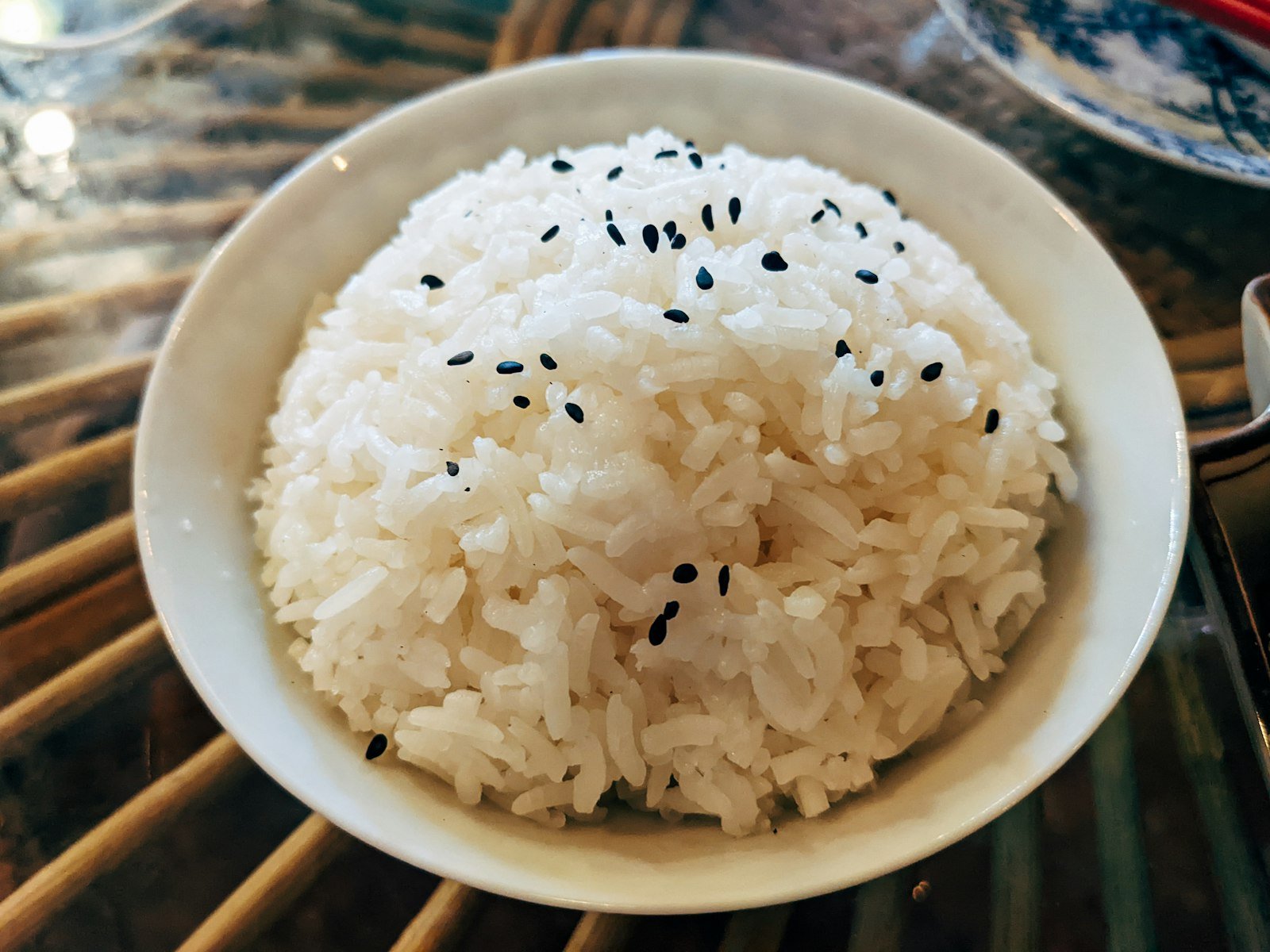
How to cook rice: the right amount of water and the right time for each rice

When people ask how to cook rice without it turning sticky or burning on the bottom, the answer is almost never the rice. It is the water, too much or too little, and the lid that keeps being lifted to check. There are two main methods.
In plenty of water, like pasta, the rice can’t run dry, but some of its flavour goes down the sink with the water. By absorption, you add only the water the rice will drink, and the grain keeps all its fragrance. Choose the method for the rice you have and what you want to do with it, as with all the basics in our food section.
In short
| Rice | Best method | Water for 1 cup of rice | Approximate time |
|---|---|---|---|
| Long grain | Plenty of water or absorption | Plenty, or 1½ cups by absorption | 10 to 15 minutes |
| Basmati | Absorption, after rinsing and soaking | 1½ cups | 10 to 12 minutes, then rest |
| Jasmine (Thai fragrant) | Absorption | 1¼ to 1½ cups | 10 to 12 minutes, then rest |
| Japanese short grain | Absorption, after rinsing and soaking | 1¼ cups | 10 to 15 minutes, then rest |
| Brown rice | Plenty of water or absorption | 2 to 2½ cups by absorption | 30 to 45 minutes |
| Risotto or pudding rice | Liquid added gradually | As the recipe says | As the recipe says |
These timings are a guide: the packet gives the one for the rice you bought, and that is the one that counts.
Why rinse rice, and when not to
Raw rice is coated in a fine dust of starch. As it cooks, this dissolves in the water and glues the grains together. Rinsing the rice in a sieve under cold water, stirring it with your fingertips until the water runs almost clear, gives you separate grains.
Rinse basmati, jasmine and Japanese rice. Don’t rinse risotto rice or pudding rice: that starch is exactly what makes them creamy.
Soaking for 20 to 30 minutes in cold water, after rinsing, helps basmati and Japanese rice. The grain takes up water right to the centre before it heats, so it cooks more evenly, and basmati lengthens instead of breaking. If you soak the rice, drain it well, or use a little less water to cook it.
The absorption method, step by step
This gives the most fragrant rice, and it is the one I taught in workshops for everyday rice.
- Measure the rice and the water in the same cup. Volume matters more than weight: one cup of long grain rice, one and a half cups of water.
- Use a heavy-based pan that isn’t too wide. In a wide pan the layer of rice is thin, the water evaporates before it is absorbed, and the bottom catches.
- Add the rice, the water and a pinch of salt, and bring to the boil over a medium heat.
- As soon as it boils, turn the heat right down and put the lid on. The rice now cooks in the steam from its own water.
- Don’t lift the lid while it cooks. Each look lets the steam out, and the rice on top stays hard.
- Turn off the heat and leave it to rest for 10 minutes, lid on. The moisture spreads evenly through the grains, and the bottom loosens.
- Fluff it with a fork, lifting the rice rather than stirring it.
When it has rested, there should be no water left in the pan and no hard grains. Little holes on the surface of the rice, like tiny chimneys, show that the water has been fully absorbed.
Cooking rice in plenty of water
The most forgiving method, useful for brown rice or a large quantity.
- Bring a large pan of water to the boil, at least five times the volume of the rice, and salt it.
- Pour in the rice and stir once so it doesn’t stick to the bottom.
- Simmer, uncovered, for the time on the packet.
- Taste a grain two minutes before the end: it should be tender, with no chalky centre.
- Drain it in a sieve and tip it back into the hot pan with the lid on for a few minutes, so it dries a little.
What goes wrong, and how to rescue it
The rice is sticky and lumpy. It wasn’t rinsed, or it was stirred while cooking, which releases starch. Serve this batch as it is; next time, rinse it and leave it alone until it has rested.
The bottom has caught but the top is hard. The heat was too high or the pan too wide, so the water evaporated before the rice absorbed it. Sprinkle two or three spoonfuls of hot water over the top, cover, and give it five more minutes on the lowest heat. Don’t scrape the bottom: leave the burnt layer in the pan, or it will flavour everything.
There is water left at the end. Too much water, or a loose lid. Put the pan back on a low heat for a few minutes without the lid, or drain it quickly.
The rice is mushy and split. Overcooked, or too much water. It can’t be rescued as a side dish, but it makes a good soup, rice cakes or rice pudding.
Cooked rice: cool it quickly
Rice can contain spores of *Bacillus cereus*, a bacterium found in soil. The spores survive cooking. If cooked rice sits warm for hours, they germinate and the bacteria can produce a toxin that causes vomiting, and reheating does not destroy it.
The Food Standards Agency’s Home food fact checker (last updated 21 August 2026, checked on 10 November 2026) says to:
- cool leftover rice as quickly as possible, ideally within one hour, and not leave it to cool in the rice cooker, steamer or pan;
- keep it in the fridge and eat it within 24 hours;
- reheat it until it is steaming hot all the way through;
- never reheat rice more than once.
To cool rice quickly, spread it out on a large, shallow plate or tray rather than leaving it heaped in the pan.
Cold, day-old rice that has been cooled and refrigerated properly is the best rice for egg-fried rice: the grains are drier and no longer stick in the pan.
The mistakes that ruin rice
- Guessing the water: the same pan gives different rice every time.
- Lifting the lid during absorption cooking: the steam escapes and the top stays hard.
- Skipping the rest: the rice is wet at the bottom and firm at the top.
- Stirring rice while it cooks: it releases starch and sticks.
- Rinsing risotto rice: it loses what makes it creamy.
- Leaving the pan of rice on the hob until the evening: that is the real food safety risk with rice, and reheating does not change it.
