


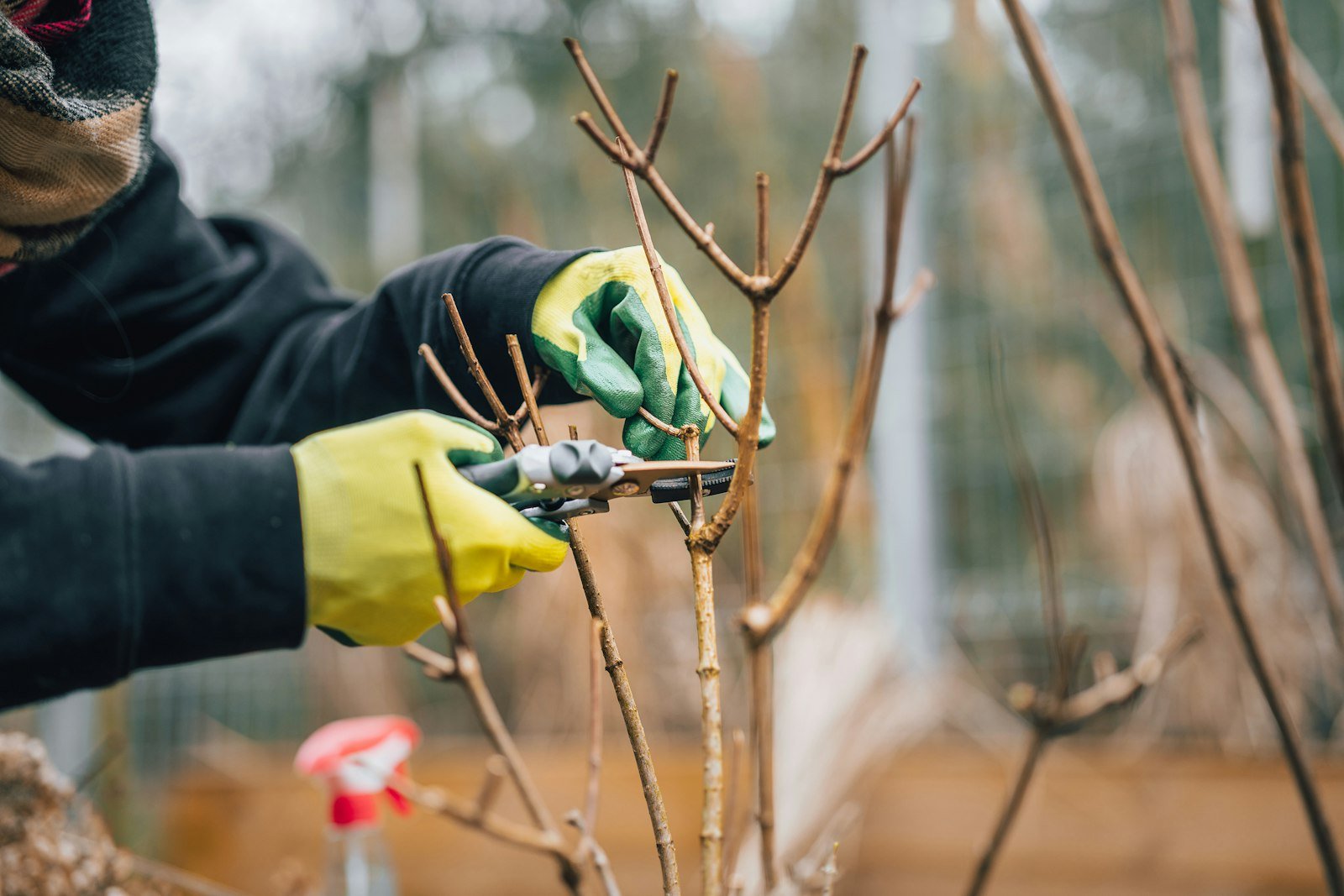
When to prune roses: the right month for each type of rose

When to prune roses depends first on the type, and most of them are pruned in late winter, as growth is just starting again: usually mid-February in the south of the UK, March in the north and in colder gardens. That rule covers hybrid teas, floribundas and repeat-flowering shrub roses, which make up most of the roses in British gardens. The exceptions are the long-stemmed ones: ramblers are pruned in late summer, once they have flowered, and climbers in winter, between December and February. Knowing which type you have matters more than the exact date, as with most jobs in the garden.
In short
| Type of rose | When to prune | How hard |
|---|---|---|
| Hybrid tea (large single flowers) | Late winter: mid-February in the south, March in the north | Hard: strong stems to 10 to 15 cm from the base |
| Floribunda (clusters of flowers) | Late winter, same timing | Less hard: strong stems to 25 to 30 cm from the base |
| Repeat-flowering shrub rose | Late winter, same timing | Light: strong new growth shortened by up to a third |
| Shrub rose that flowers once | Late summer, after flowering | Light: dead, crossing and spindly wood only |
| Climber | Winter, December to February | Flowered side shoots cut back by two thirds |
| Rambler | Late summer, after flowering | One in three of the oldest stems removed |
| A rose you can’t identify | February or March | Moderate: a third to a half off |
These timings and cutting heights are those of the Royal Horticultural Society’s pruning guides, checked on 9 November 2026.
Why late winter works for most roses
A rose pruned while it is still dormant sends all its energy into the buds you leave, and they break into strong shoots as the days lengthen. By late winter the worst of the frost is usually over, so the fresh cuts and the first tender shoots are less likely to be damaged.
The RHS suggests waiting until March in northern and colder gardens for that reason: a rose pruned in mid-February in Aberdeenshire or the Pennines can push out shoots that a hard frost then blackens. In a sheltered town garden in the south, mid-February is fine.
You don’t need a calendar to know when. Look at the buds on the stems: when they start to swell and turn red, the rose is waking up, and it’s time.
Bush roses: hybrid teas and floribundas
These are the roses of most front gardens and rose beds, with a single upright bush of stems from a central point.
Hybrid teas carry one large flower per stem. The RHS advises pruning them hard: the strongest shoots back to four to six buds, about 10 to 15 cm from the base, and weaker shoots shorter still, to two to four buds, 5 to 10 cm from the base. Hard pruning feels brutal, but these roses flower on the new shoots it produces.
Floribundas carry clusters of smaller flowers and are pruned less severely, because more stems mean more clusters. Cut the strongest shoots to 25 to 30 cm from the ground, and weaker ones lower.
The counter-intuitive part, for both: the weaker the stem, the harder you cut it. A thin shoot cut hard puts its energy into one or two strong buds; left long, it produces a scatter of weak, flowerless growth.
Shrub roses
Shrub roses are larger, often thornier and more scented, and many old garden roses and English roses belong here. They flower on older wood, so they are not cut down like bush roses.
- Shrub roses that repeat-flower are pruned in late winter. Shorten strong new growth by up to a third, cut strong side shoots to two or three buds, and take one or two of the oldest stems right back to the base each winter so that young stems replace them.
- Shrub roses that flower once, in early summer, are pruned in late summer when flowering has finished. Only remove dead, diseased and damaged wood, crossing stems and spindly growth. Pruning them in winter would cut off the wood that carries next summer’s flowers.
Many old shrub roses have an arching habit. Shortening their stems just to keep them smaller spoils the shape: if a shrub rose is too big for its spot, take out whole old stems at the base instead.
Climbers and ramblers: the two roses people mix up
Both have long stems that need support, and the difference decides when you prune.
Climbers have stiffer stems and usually flower more than once, often until autumn. Prune them in winter, between December and February: cut each side shoot that has flowered back by two thirds of its length, and tie new long stems into the wires or trellis. Bend them as close to horizontal as you can. A horizontal stem breaks into flowering shoots all along its length; a vertical one flowers only at the top.
Ramblers have long, flexible stems and one big flush of flowers in early summer, often followed by hips. Prune them in late summer, once flowering is over. When they have covered their support, take out one in three of the oldest stems entirely, then shorten the side shoots by about two thirds.
If you don’t know which you have, the RHS gives a simple test: prune it moderately for one season. A rose that responds with a mass of strong, flowerless shoots is probably a rambler; one that sends out less vigorous growth that flowers is probably a climber.
How to make the cut
The timing gets the rose ready; the cut decides where it grows next.
- Start with the three Ds: dead, diseased and damaged stems, cut back to healthy wood. Healthy wood has white pith in the centre of the cut; brown pith means you need to go lower.
- Remove crossing and spindly stems, then any stem growing into the middle of the bush. You want an open goblet shape that lets air through: roses with crowded centres suffer more from black spot.
- Cut just above an outward-facing bud, with a cut that slopes away from it. The new shoot grows in the direction the bud faces, so outward buds open the bush. Too close and the bud dies; too far above it and the stub left behind dies back.
- Use sharp, clean secateurs for stems up to finger thickness, and loppers or a pruning saw above that. Blunt blades crush the stem instead of cutting it, and crushed tissue is where dieback starts.
- Pull off suckers: shoots growing from below the graft union, often with smaller, paler leaves. Trace them back to the root and tear them off rather than cutting, which only encourages them to regrow.
After pruning, clear away the old leaves from under the rose, especially if it had black spot last summer, and feed it in spring.
A newly planted rose
The RHS advises pruning all newly planted roses hard, except climbers and shrub roses, to encourage vigorous shoots from the base. A bare-root bush rose planted in winter is cut back to a few buds on each stem in late winter, even though it can feel like a waste.
A newly planted climber is the opposite case: leave its long stems, remove only what is dead, damaged or spindly, and tie the stems in along the lowest wires.
Missed the window?
If April comes and your roses are already in leaf, prune anyway, but more lightly. Concentrate on dead and weak wood and the overall shape; the rose may flower a little later than usual. A late prune is better than none.
Summer is not a pruning season for bush roses, but deadheading is: snip off faded flowers on repeat-flowering roses to encourage more. Leave the faded flowers on roses grown for their hips, such as many ramblers and rugosas.
In autumn, if tall bush roses are in an exposed spot, you can shorten their longest stems a little so that winter winds don’t rock the roots loose. That is tidying, not pruning: the real pruning still waits for late winter.
The mistakes that cost you flowers
- Pruning a rambler in winter: you cut off the stems that would have flowered in June.
- Pruning once-flowering shrub roses in winter: same result.
- Leaving weak stems long: they produce twiggy growth and few flowers. Weak stems are cut harder, not lighter.
- Cutting to an inward-facing bud: the new shoot grows into the middle of the bush and crowds it.
- Leaving long stubs above the bud: the stub dies back and can let disease in.
- Pruning a bush rose in the first warm spell of January: a frost in February can damage the shoots it pushes out too early.
